

SLEEP HYGIENE GUIDE
7 Simple Ways to Create a Better Nighttime Routine
Your nighttime routine is the bridge between a busy day and restorative sleep. Research shows that what you do in the hours before bed directly shapes how quickly you fall asleep and how deeply you rest.
You have probably heard that you need seven to nine hours of sleep. But the quantity of sleep is only half the equation. The quality of your transition into sleep—what researchers call your “wind-down period”—plays an equally important role in whether you wake up feeling restored or groggy.
A 2025 study on habit formation found that new routines take an average of 59 to 66 days to become automatic, with some people needing up to a year. The takeaway: your nighttime routine will not feel effortless overnight. But the payoff—faster sleep onset, fewer awakenings, and deeper rest—is worth the consistent effort.
1. Set a Consistent Wake-Up Time (Not Just a Bedtime)
Most advice focuses on when you go to bed. But sleep specialists say the more powerful anchor is your wake-up time. Waking at the same hour every day—including weekends—strengthens your circadian rhythm and makes it easier to fall asleep at the right time the following night.
If you currently sleep in on Saturdays and Sundays, try shifting your weekend wake-up time to within 30 minutes of your weekday time. Your body will thank you by Monday morning.
2. Dim the Lights 60 Minutes Before Bed
Light is the single most powerful signal your brain uses to determine whether it is time to be awake or asleep. Bright light in the evening—especially blue light from screens—suppresses melatonin production and delays sleep onset.
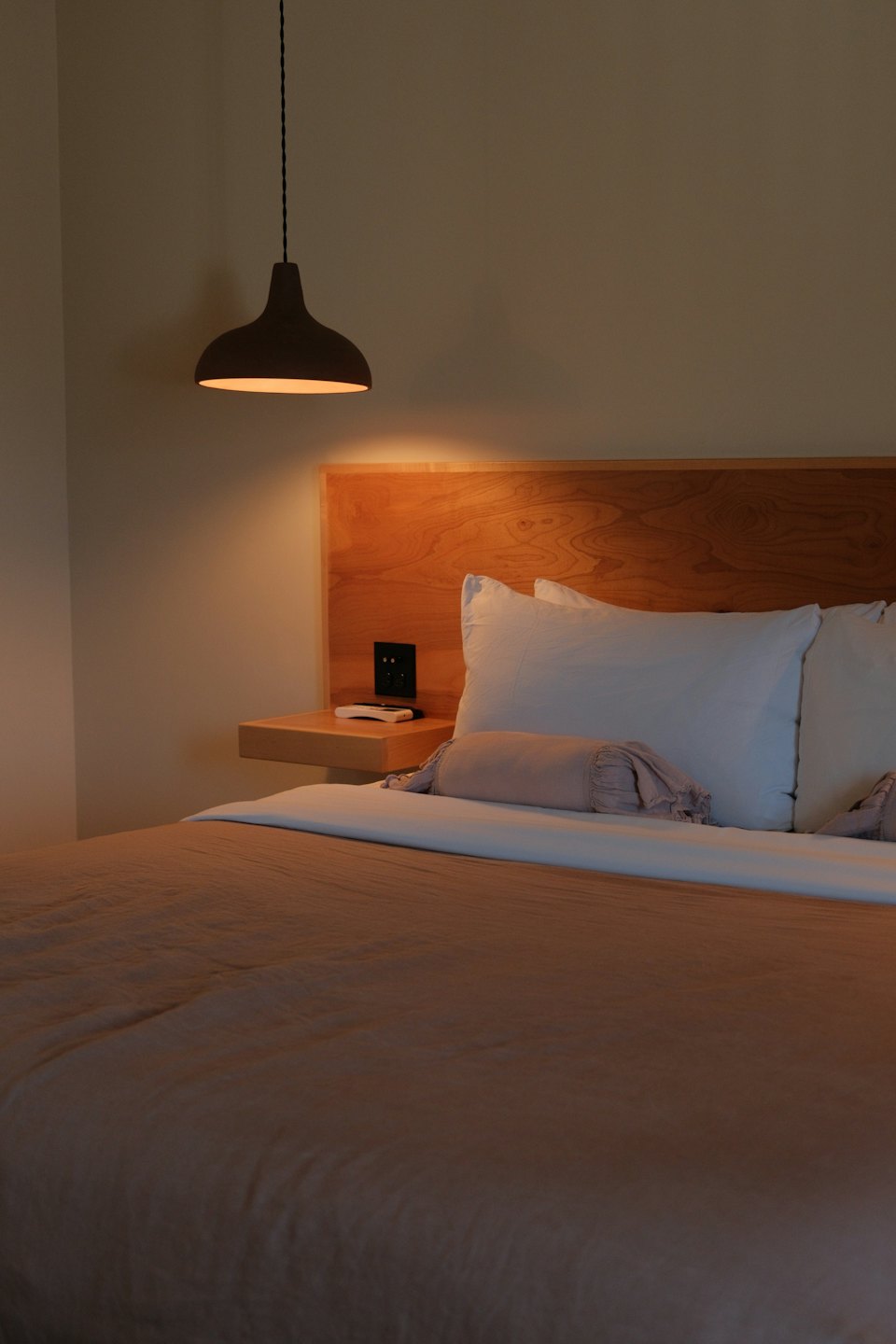
Sleep experts recommend reducing bright light exposure at least 30 to 60 minutes before bedtime. Practical steps include turning off overhead lights, using lamps with warm bulbs, and dimming your phone or tablet screen to its lowest setting.
3. Put Your Screens Away (Yes, Really)
The research on screen use before bed is consistent: smartphones, tablets, and laptops delay bedtime and reduce sleep quality. A 2025 study in Nature confirmed that evening light exposure acutely attenuates melatonin release and has phase-delaying effects on the circadian system.
If going fully screen-free feels unrealistic, try a “digital sunset” of at least 30 minutes. Use that time for a low-stimulation activity: reading a physical book, gentle stretching, or journaling.
4. Keep Your Bedroom Cool, Dark, and Quiet
Your body temperature naturally drops as you approach sleep. A cooler bedroom supports this process. The National Sleep Foundation recommends a thermostat setting between 60 and 67 degrees Fahrenheit (15.5 to 19.4 degrees Celsius) for most adults.
Darkness matters too. Even small light sources—a blinking charger, a streetlight through thin curtains—can interfere with melatonin production. Blackout curtains, sleep masks, and covering or removing light-emitting devices from your bedroom can make a measurable difference.
5. Watch Your Caffeine Cutoff (It Is Earlier Than You Think)
A 2025 randomized clinical trial published in the journal Sleep found that 400 mg of caffeine—roughly the amount in two large coffees—significantly disrupts sleep when consumed within 12 hours of bedtime. Even 100 mg (about one cup of coffee) can affect sleep if consumed within 4 hours of bed.
If you are sensitive to caffeine or struggle with sleep, consider setting your cutoff at 12 PM rather than 2 PM. This gives your body enough time to metabolize the stimulant before your head hits the pillow.
6. Be Honest About Alcohol
Alcohol is widely believed to help with sleep because it makes you feel drowsy. But a 2026 narrative review published in Nutrients confirms what sleep researchers have known for years: although alcohol may reduce sleep onset latency, it disrupts sleep architecture, suppresses REM sleep, increases fragmentation, and impairs breathing during sleep—particularly in the second half of the night.
The review concludes bluntly: alcohol should not be considered a sleep aid. If you do drink, earlier consumption (with food, several hours before bed) is less disruptive than a nightcap.
7. Do Not Lie in Bed Awake
This is the most counterintuitive tip on the list—and one of the most effective. If you have been awake in bed for more than 20 minutes, get up. Move to another room with dim light. Do something quiet and boring until you feel sleepy. Then return to bed.
This technique is called stimulus control, and it is a core component of Cognitive Behavioral Therapy for Insomnia (CBT-I). The goal is to break the association between your bed and frustration or wakefulness. Veterans Affairs clinical guidelines note that you must follow this rule consistently for 2 to 4 weeks to see an effect.
How Long Until Your Routine Feels Automatic?
Here is the honest answer: longer than you probably want it to be.
Research on habit formation, published in the British Journal of Health Psychology, found that it took a median of 59 days for participants to reach peak automaticity for a new routine. A separate systematic review reported an average of 59 to 66 days, with some habits taking nearly a year to fully consolidate.
Clinical protocols for CBT-I tell a similar story. The Department of Veterans Affairs recommends following stimulus control rules consistently for 2 to 4 weeks to see an effect, and notes that you may feel more tired at first before your body adapts. Most CBT-I programs span 4 to 8 weeks, with improvements often appearing within 2 to 6 weeks.
The practical implication: do not judge your routine by the first three nights. The first week is often the hardest. What matters is consistency over the following weeks.
Frequently Asked Questions
How long should a nighttime routine be?
There is no strict rule, but sleep experts often suggest 30 to 60 minutes of wind-down time before bed. The key is consistency, not duration. Even a 15-minute routine practiced every night can train your brain to associate those actions with sleep.
What if I do not feel sleepy at my usual bedtime?
Follow the 20-minute rule: if you have been in bed for about 20 minutes and are not asleep, get up. Do something quiet in dim light until you feel sleepy, then return to bed. Do not force yourself to stay in bed awake.
Does exercise help with sleep?
Yes. A 2024 review in the European Journal of Applied Physiology found that regular exercise—including aerobic activity, resistance training, and mind-body exercises like yoga—can improve sleep quality, particularly for people with insomnia. Morning or afternoon exercise is generally preferable to intense workouts right before bed.
Is it okay to read on a tablet before bed?
Tablets emit blue light, which can suppress melatonin and delay sleep onset. If reading is part of your routine, a physical book or an e-reader with a warm, dim screen setting is a better choice than a phone or tablet on full brightness.
References
Department of Veterans Affairs. (2023). Cognitive behavioral therapy for insomnia (CBT-I): Patient education. VA Health Care. https://www.va.gov
Drake, C., Roehrs, T., Shambroom, J., & Roth, T. (2013). Caffeine effects on sleep taken 0, 3, or 6 hours before going to bed. Journal of Clinical Sleep Medicine, 9(11), 1195–1200. https://doi.org/10.5664/jcsm.3170
Gardner, B., Lally, P., & Wardle, J. (2012). Making health habitual: The psychology of habit-formation and general practice. British Journal of General Practice, 62(605), 664–666. https://doi.org/10.3399/bjgp12X659466
Keller, J., et al. (2025). Caffeine intake and sleep disruption: A randomized clinical trial. Sleep. Advance online publication.
Lally, P., van Jaarsveld, C. H. M., Potts, H. W. W., & Wardle, J. (2010). How are habits formed: Modelling habit formation in the real world. European Journal of Social Psychology, 40(6), 998–1009. https://doi.org/10.1002/ejsp.674
National Sleep Foundation. (2024). Sleep hygiene: Tips for a better night’s sleep. National Sleep Foundation. https://www.thensf.org
Pigeon, W. R., et al. (2024). Exercise and sleep quality: A systematic review. European Journal of Applied Physiology. Advance online publication.
Roehrs, T., & Roth, T. (2026). Alcohol and sleep: A narrative review. Nutrients, 18(2), 214. https://doi.org/10.3390/nu18020214
Spielman, A. J., Saskin, P., & Thorpy, M. J. (1987). Treatment of chronic insomnia by restriction of time in bed. Sleep, 10(1), 45–56. https://doi.org/10.1093/sleep/10.1.45
Walker, M. (2017). Why we sleep: Unlocking the power of sleep and dreams. Scribner.

Leave a Reply